




Vorig bericht
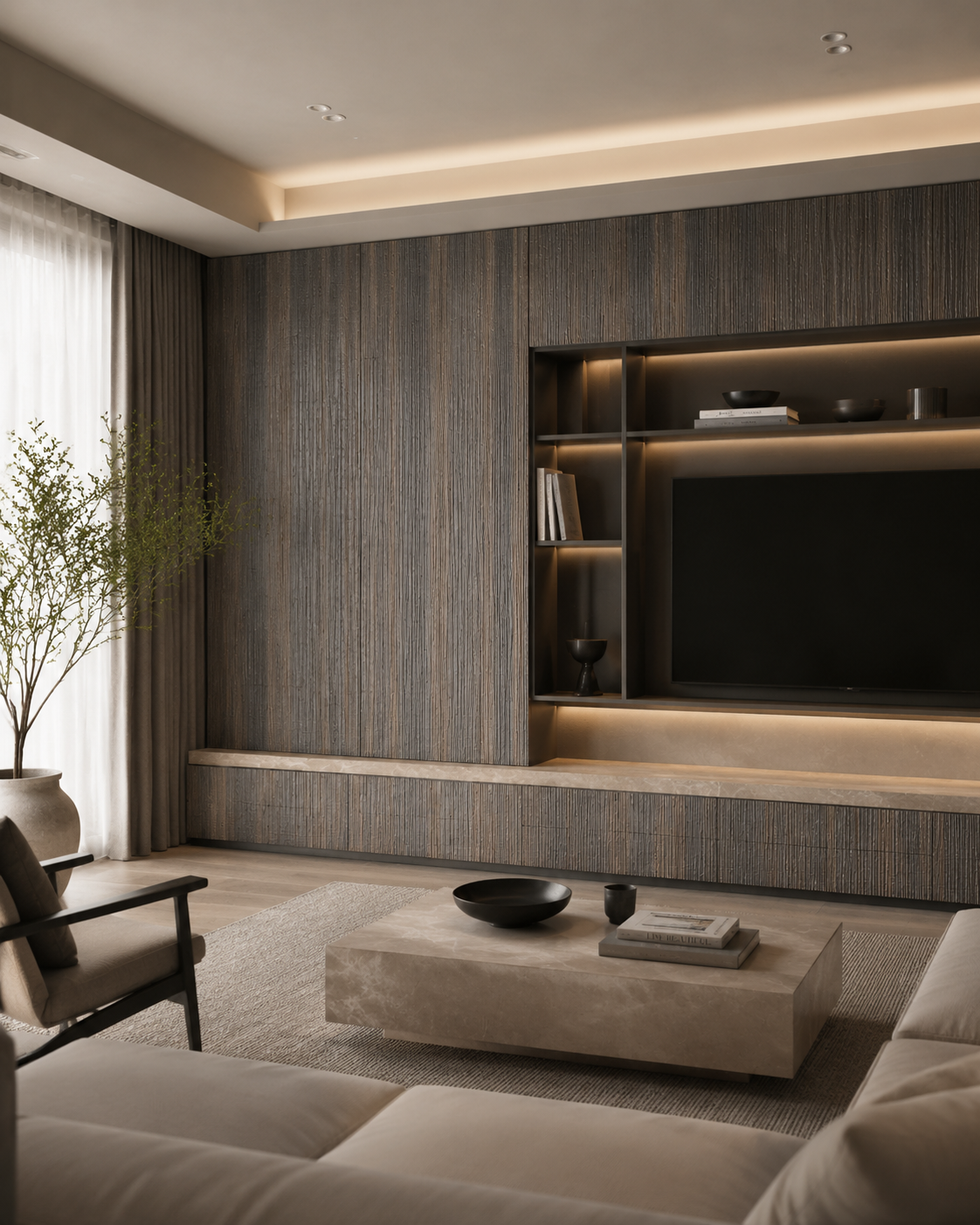
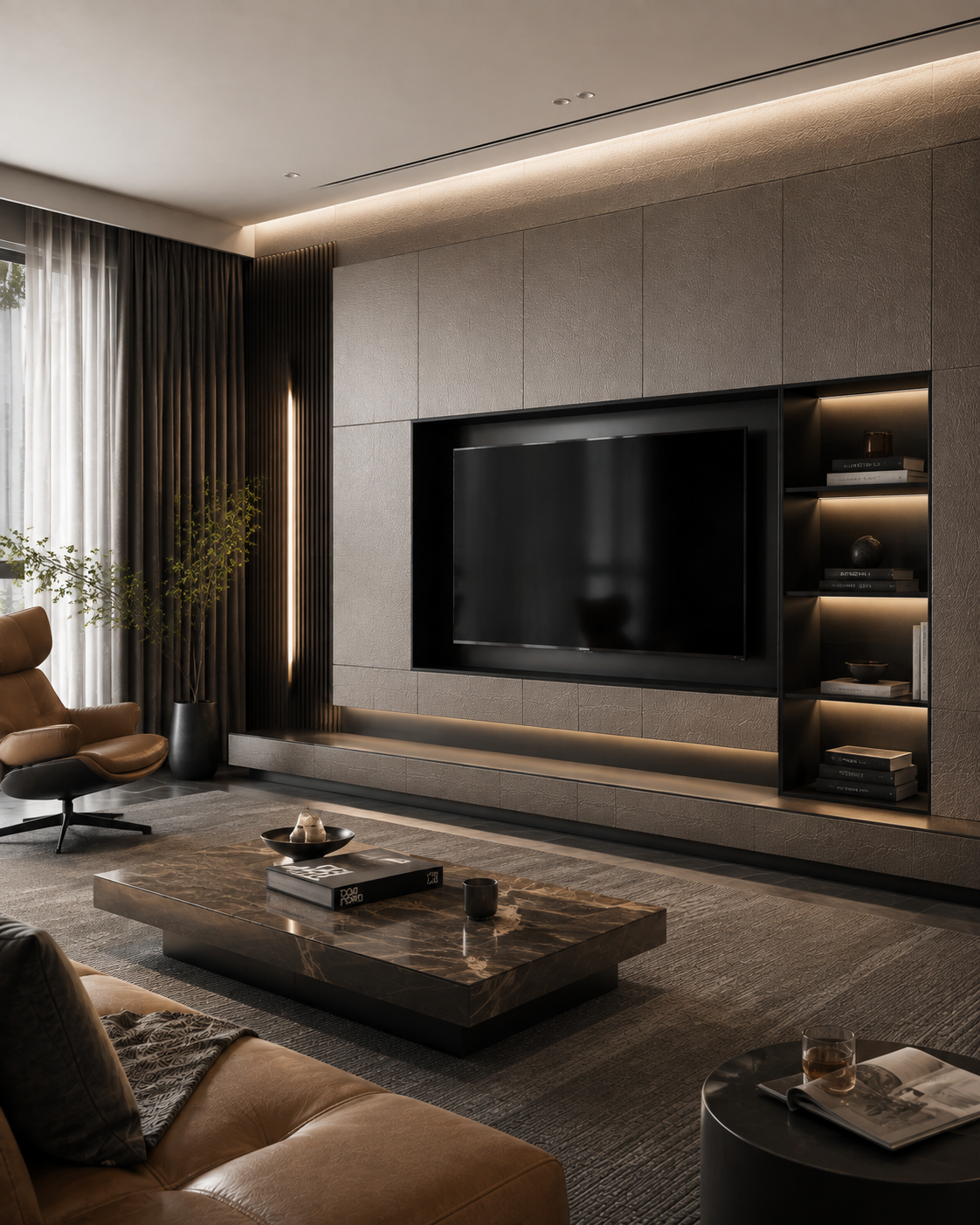
The Art Deco style is undergoing a significant revival. In 2026, Pinterest's trend report lists "Neodeco" as a key trend of the year, painting a clear picture of "herringbone patterns and brass frameworks."
Architectural Digest describes it as "the designer-approved trend of 2026."
From the reopening of the Waldorf Astoria in New York to a 15% increase in Art Deco design briefs in the global hospitality sector, geometric symmetry, metallic lines, and high‑contrast colour blocks are once again becoming the narrative language of high‑end hotels, boutique stores, and luxury residential projects.
However, when designers translate Art Deco from renderings to real spaces, one practical question persists: How long can those delicate gold lines and high‑contrast colour blocks "remain" through daily cleaning and everyday contact?
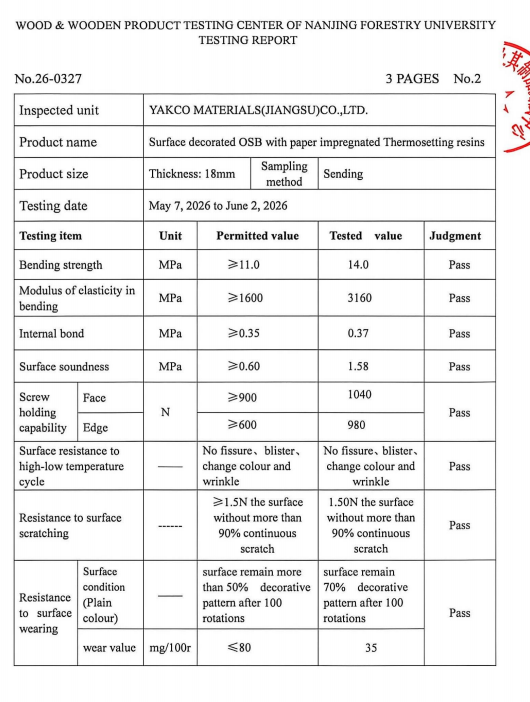
YAKCO Art Deco Melamine Board answers this question with a set of "pattern durability" data from the 2026 national test.
More: yakco technology
1. What Is "Decorative Pattern Retention" and Why Is It Particularly Important for Art Deco?
In the resistance to surface wearing test, patterned panels (i.e., panels with printed patterns) are evaluated differently from plain colour panels.
Plain colour panels are judged by "whether show‑through occurs after 350 rotations" – i.e., whether the decorative layer is worn through to reveal the substrate. Patterned panels, on the other hand, are judged by how much of the decorative pattern remains after 100 rotations. National standard GB/T 15102-2017 requires more than 50% retention to pass.
100 rotations simulate the daily friction that a panel undergoes over approximately several years of real‑world use – and after that, how much of the pattern is "still there."
50% is the passing line; 70% is far above it.
For Art Deco, decorative pattern retention is particularly significant. Art Deco's visual language is built upon precision lines – gold vertical stripes are typically only 0.3mm to 1mm wide, roughly the thickness of three strands of hair. These fine lines are extremely sensitive to wear: a loss of 0.1mm in line width can visually result in a "broken line."
At the same time, Art Deco's high‑contrast colour schemes – black‑gold, blue‑silver, black‑white – rely on clear boundaries to deliver visual impact. Once the boundaries blur, the contrast of the entire pattern collapses.
2. 70% Decorative Pattern Retention: 20 Percentage Points Above the Passing Line
YAKCO achieved 70% in decorative pattern retention, while the national standard requires only 50%. What does this 20‑percentage‑point gap mean in real‑world use?
First, sharper pattern edges.
The gold lines and geometric borders of Art Deco remain sharp at 70% retention; at 50% retention, the edges have already developed visible wear and blurring.
Second, higher colour saturation.
Pattern retention is not just about "shape" – it is also about "colour" – the ink and resin of the decorative layer wear down together under friction. 70% means less loss of colour layer thickness – gold does not darken, black does not turn grey.
For high‑contact areas such as hotel lobby feature walls and boutique store display cabinets, this means that Art Deco's high‑contrast colour blocks remain "black‑and‑white, gold‑and‑brilliant" after years of use.
Third, longer visual lifespan.
The number of friction cycles required to wear from 70% down to 50% is far greater than from 100% down to 70%.
The "visual lifespan" of YAKCO Art Deco panels is approximately 40%‑60% longer than that of passing‑grade products.
For commercial space operators, this means the refurbishment cycle of walls and cabinets can be extended, and overall maintenance costs are reduced accordingly.
3. Wear Value 35 mg/100r Scratch Resistance 1.5N: "Double Insurance" for 70% Pattern Retention
A pattern retention of 70% is not achieved in isolation. YAKCO Art Deco Melamine Board simultaneously achieves a wear value of 35 mg/100r and scratch resistance of 1.5N – Pass.
Wear value measures the mass loss of the decorative layer under friction – the lower the value, the slower the wear. YAKCO achieved 35 mg/100r, far better than the national standard requirement of ≤80 mg/100r.
This means that even with daily cleaning and wiping, the thickness loss of the decorative layer is minimal – the "protective layer" of the pattern remains thick, and the clarity of the pattern is maintained over the long term.
Scratch resistance of 1.5N prevents hard objects from "cutting through" the lines in a single incident.
The walls of hotel lobbies are brushed by the metal corners of suitcases every day; boutique cabinet doors are scratched by customers' keys and jewellery daily – a scratch resistance of 1.5N means that everyday hard objects sliding across the board surface will not leave long, deep continuous scars on the gold lines, only extremely slight and discontinuous marks that are unnoticeable from a distance.
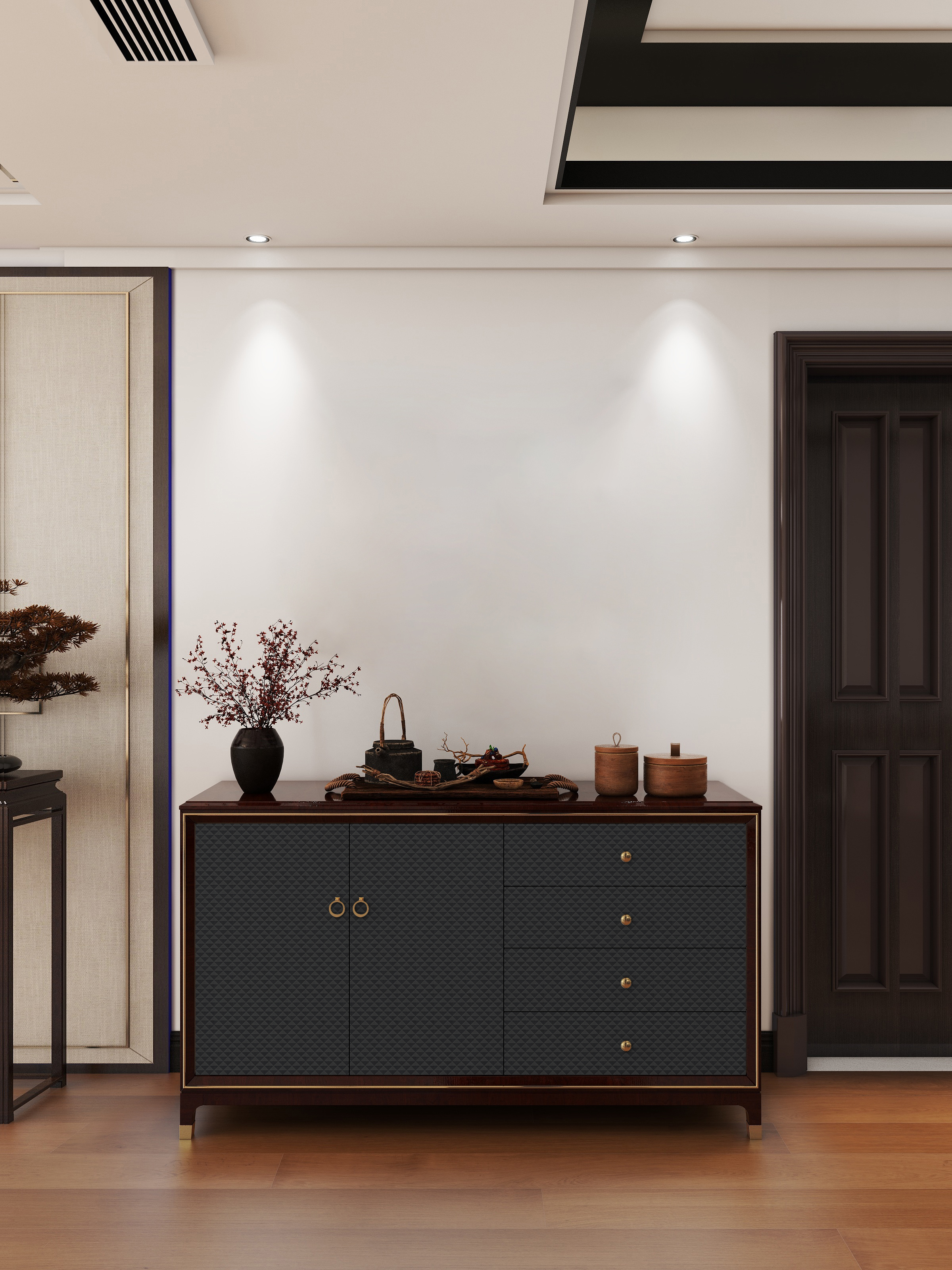
Wear resistance and scratch resistance work together: the former prevents the pattern from being "worn away," and the latter prevents the lines from being "cut through" – together, they form a complete protection for Art Deco's delicate patterns.
4. Resistance to Surface Staining Grade 5: The "Boundary Defence" of High‑Contrast Colour Blocks
Art Deco's black‑gold, blue‑silver, and black‑white colour schemes rely on clear boundaries to deliver visual impact.
But in commercial spaces, accidental spills of coffee, red wine, and soy sauce are almost inevitable. Once liquid penetrates the dark colour blocks, the light metallic lines turn yellow and dull, and the contrast of the entire pattern collapses.
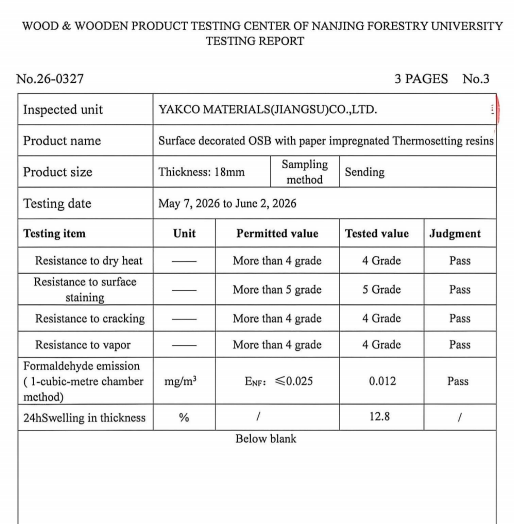
YAKCO achieved Grade 5 in resistance to surface staining (the highest level), while the national standard requires only ≥ Grade 4. Coffee, red wine, and soy sauce spills can be wiped clean with a damp cloth – no staining, no rings.
The boundary between gold and dark colours will not be "breached" by liquids – gold does not darken, and black does not develop dark spots.
For high‑contact areas such as hotel guest room desks, coffee shop counters, and restaurant bars, this data means that Art Deco's delicate patterns will not be "disfigured" by a single accidental spill.
5. Behind the Pattern "Remaining" – The Substrate Provides the "Backbone"
Achieving a pattern retention of 70% cannot rely on the decorative layer alone – it requires the substrate to "support" it from behind.
If the substrate undergoes slight deformation due to temperature and humidity changes, micro‑cracks appear on the decorative layer – these micro‑cracks accelerate pattern wear, deepen scratches, and expand channels for liquid penetration.
YAKCO's substrate has a stable density of 0.72 g/cm³, internal bond of 0.37 MPa, and surface soundness of 1.58 MPa.
Uniform density means the substrate surface has no "soft spots" or "hard spots" – the decorative layer is evenly stressed during pressing. High internal bond means the internal layers of the substrate are "held together tightly," without warping or arching over time.
High surface soundness means the decorative layer is firmly "nailed" to the substrate, and the edges of the pattern do not "loosen" due to long‑term use.
A stable substrate allows the pattern to "remain."
6. Conclusion: The Delicacy of Art Deco Withstands "Thousands of Wipes"
Designers choose Art Deco for the sharpness of lines, the clarity of borders, and the purity of colour blocks – the visual impact that geometric order brings.
But whether this impact can be maintained in real spaces over the long term depends on whether the pattern can "remain" through daily cleaning and wiping.
YAKCO Art Deco Melamine Board uses the data of decorative pattern retention 70%(national standard 50%), wear value 35 mg/100r(national standard ≤80 mg/100r), and resistance to surface staining Grade 5 (the highest level)to provide an "invisible protective net" for Art Deco's delicate patterns.
0.3mm gold lines do not blur from daily wiping, high‑contrast colour blocks do not stain from accidental spills, and geometric borders do not "break" over time.
When a designer says, "I want the delicacy of Art Deco," YAKCO answers the unspoken question with data: "Clear today, still clear in five years."
More: Art Deco Melamine Board